The Hermetic axioms: why the Kybalion closes by demanding practice, not theory
The Kybalion's final chapter brings no new law: it asks that knowledge become practice, that the mind be treated as a tool, and that the flame be passed on.
· 3 min read · Sources
Source video
NEW ACROPOLIS · “Caibalion – Ep. 15 | A Sabedoria Hermética na Vida Prática • Reflexão final com Lúcia Helena Galvão”
In 1 minute
- The final chapter gathers axioms that treat knowledge as commitment: knowledge left unused is like wealth left idle, and the flame must be shared.
- In Lúcia Helena Galvão's reading, the principles become tools: change the vibration, cultivate the opposite virtue, and stop saying “I am afraid” in favor of “I feel afraid.”
- Ideas about vibration, planes and cause and effect belong to the Hermetic tradition, not to scientific findings.
Full article
After fourteen lessons on the principles of Hermetic philosophy, teacher Lúcia Helena Galvão, of Nova Acrópole, chooses to close the series with a demand. The final chapter of The Kybalion, she says, presents no new law. It asks what the reader will do with what they have read.
The Kybalion, published in 1908 under the pseudonym "Three Initiates," organizes into seven principles the philosophy attributed to Hermes Trismegistus, and its final chapter gathers axioms, maxims that condense the whole. The ideas about vibration, planes and cause and effect belong to the Hermetic tradition and to Galvão's reading; they are not scientific findings.
The flame that must not go out
The series always opens with verses by the English poet Edward Carpenter, asking that the flame not be allowed to die. In the final lesson, Galvão returns to them to say that The Kybalion, if it has been useful, must be passed on. Knowledge is commitment, she sums up, and whoever knows is answerable for it. The flame stays lit only when it is shared.
Knowledge is for using
The chapter's first axiom compares knowledge to wealth: both exist to be used, and whoever hoards without applying them comes into conflict with the forces of nature. The teacher likens it to the parable of the talents and cites Helena Blavatsky, Socrates and Shankara to argue that knowledge without practice is sterility. A remedy does not cure by being named; it must be taken. And only the knowledge that makes a person better is worth anything.
The image is of standing water, which rots. Knowledge left standing follows the same path.
The principles as tools
In the second part, the lesson rereads the book's laws as recommendations. To change a mental state, change the vibration. To neutralize a destructive emotion, focus on the opposite virtue. To counter a negative rhythm, polarize toward the opposite extreme. Fear is not overcome by dwelling on fear, but by cultivating courage, the way one waters a violet.
The method has three steps: attention, to observe where the mind goes; will, to choose the direction; and repeated action, because small daily gestures shape the new pattern. The mental environment can also be trained, much as Sufi schools are said to do: what one looks at, listens to and touches should elevate consciousness.
Feeling fear, not being fear
One of the most practical pieces of advice, in Galvão's native Portuguese, is to swap the verb "to be" for the verb "to feel" when naming a state. Someone who says they feel afraid or feel tired is not the same thing as fear or fatigue, and keeps open the possibility of overcoming them. To show that even taste can be retrained, the teacher says, with humor, that she herself learned to like diet soda.
From selfishness to the whole
The chapter addresses the law of cause and effect, from which nothing would escape, but notes that higher planes have laws that override those of the lower ones. Whoever lives by the laws of spirit, which Galvão links to unity, love and truth, would be freed from the slavery of circumstance.
The greatest polarization a sage can make, she says, is to move from selfishness to altruism: to stop projecting one's own personality and begin projecting the ALL. The illustration is the legend of the stonecutter, who wished to be a minister, a king, the sun, a cloud and a mountain, and only in the end realized that the most powerful thing was what he already was at the start.
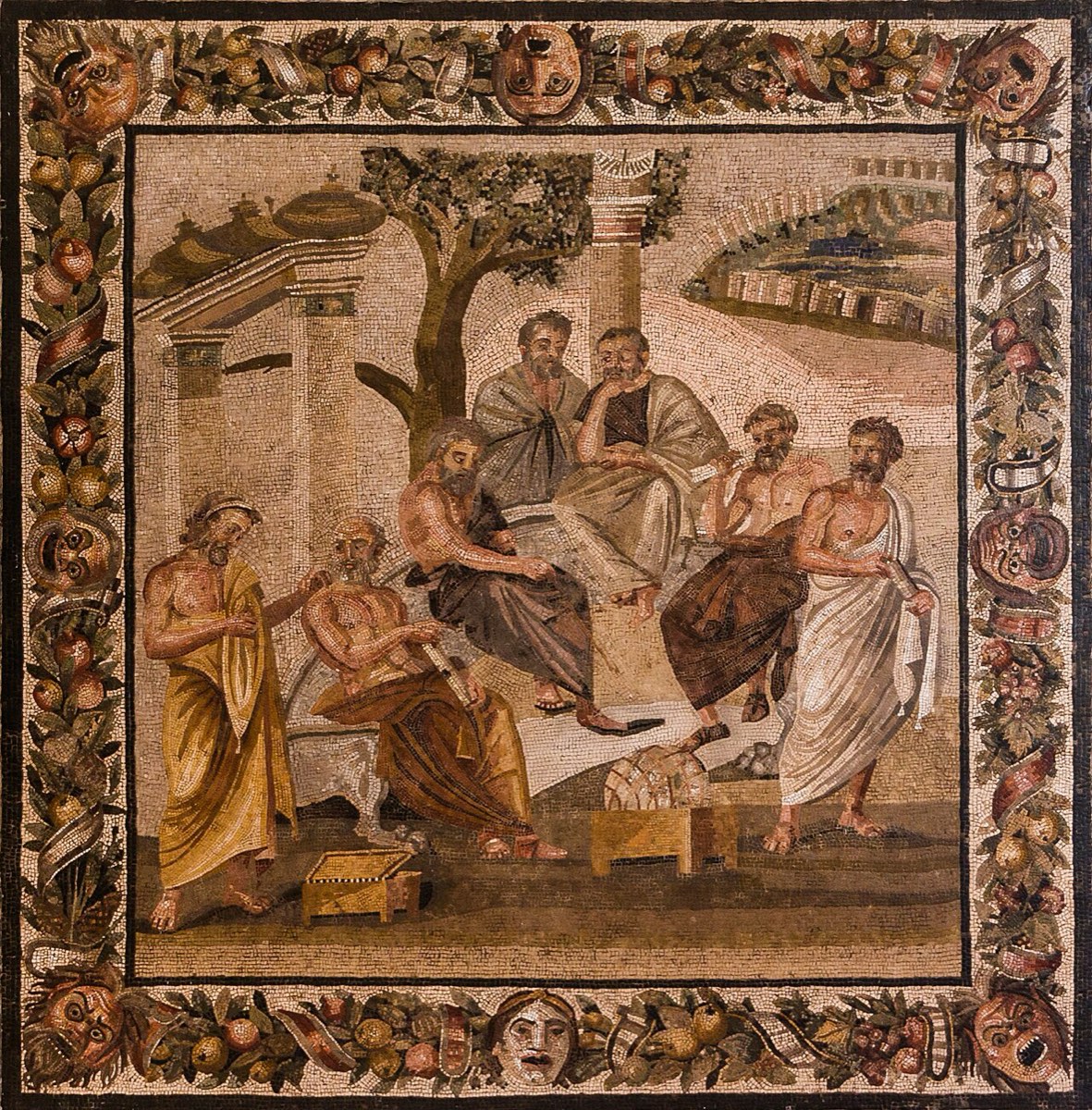
Plato, Marcus Aurelius, Chopin and Confucius appear as people who chose to be more than the crowd. The sage, the lesson states, does not seek to be remembered, but to be useful.
A small test
In closing, the proposal is a modest exercise: change one mental habit and prove to oneself that it is possible. If everything is mind, as Hermeticism holds, changing the mind is changing the world. Then, repeat.
The series ends without a final stop. It ends with a torch handed to each listener, and whether to pass it on is a decision left to whoever receives it.
Sources and references for this article
Lúcia Helena Galvão lecture (Nova Acrópole) on the Kybalion, final chapter_The Kybalion_, final chapter: Hermetic Axioms
Kybalion, Wikipedia (published in 1908, and the seven principles)The Kybalion, Three Initiates, 1908 (full text in English, Project Gutenberg)Translated from Portuguese. This article was rewritten from a post on the original blog, in Portuguese. Read the original
Get the best articles of the week
One email a week, no spam. Unsubscribe anytime.
Read next
 Western esotericism · VideoThe Kybalion and its seven principles: a 1908 book that speaks in Egypt's name
 Western esotericismA Hermetic manifesto against "selective blindness": mind, ether, and archons
 Vedanta and YogaGita, lesson 12: heaven as a promise, and the search to feel at ease with oneself
 Vedanta and YogaVedānta: texts, schools, and the study method of one of India's six philosophies
 Western esotericism · VideoWhy No Outer Change Lasts Without Inner Change, According to Stoic Philosophy