Vedānta: texts, schools, and the study method of one of India's six philosophies
Vedānta, “the end of the Vedas,” brings together foundational texts, three major schools, and a traditional method of study with a teacher, and can be compared with other mystical traditions.
· 4 min read · Sources

In 1 minute
- Vedānta, “the end of the Vedas,” is the school of Indian philosophy grounded in the Upanishads, the Brahma Sūtra, and the Bhagavad Gītā, and it seeks liberation (mokṣa).
- Its three major schools disagree about the relationship between God, soul, and world, and so they favor different paths: knowledge in Advaita, devotion in the other two.
- Traditional study requires a teacher, qualifications in the student, and three stages — hearing, reflecting, and meditating — which resonate with other mystical traditions.
Full article
The Sanskrit word Vedānta means “the end of the Vedas,” but the end here is not merely chronological. It designates the arrival point of Vedic literature: after the rituals, hymns, and ceremonies come the Upanishads, texts that ask what reality is, who the “self” is, and how to escape suffering. It is from these questions that one of the six orthodox schools of Hindu philosophy is born.
This piece gathers the essentials for anyone wanting to start studying the subject: the sources, the vocabulary, the three main schools, the traditional method of learning, and a comparison with other spiritual paths. Everything that follows describes what the tradition claims. These are not scientific findings.
Three texts, three starting points
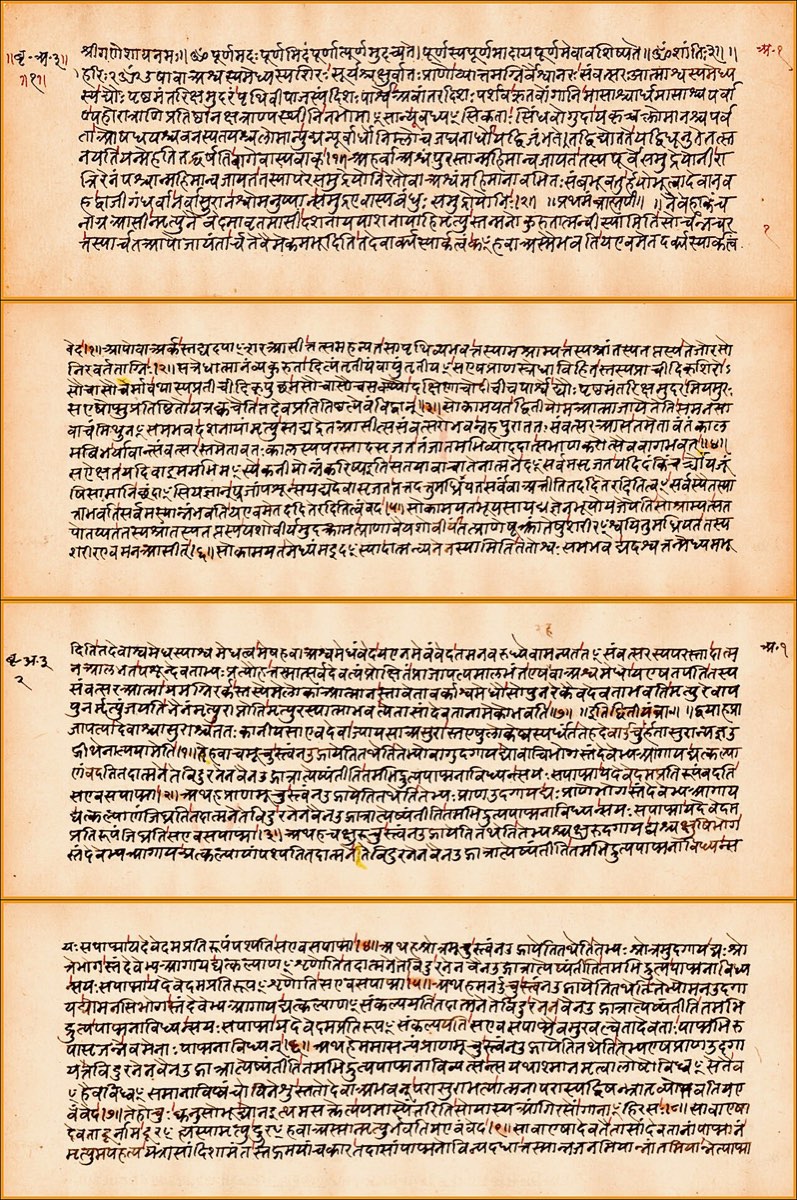
Vedānta rests on a set of texts called the Prasthānatrayī, the “three starting points.” The first are the Upanishads, the final, philosophical portion of the Vedas, seen as revealed and passed down from teacher to disciple. Of the hundreds that exist, ten to thirteen are usually held to be the principal ones.
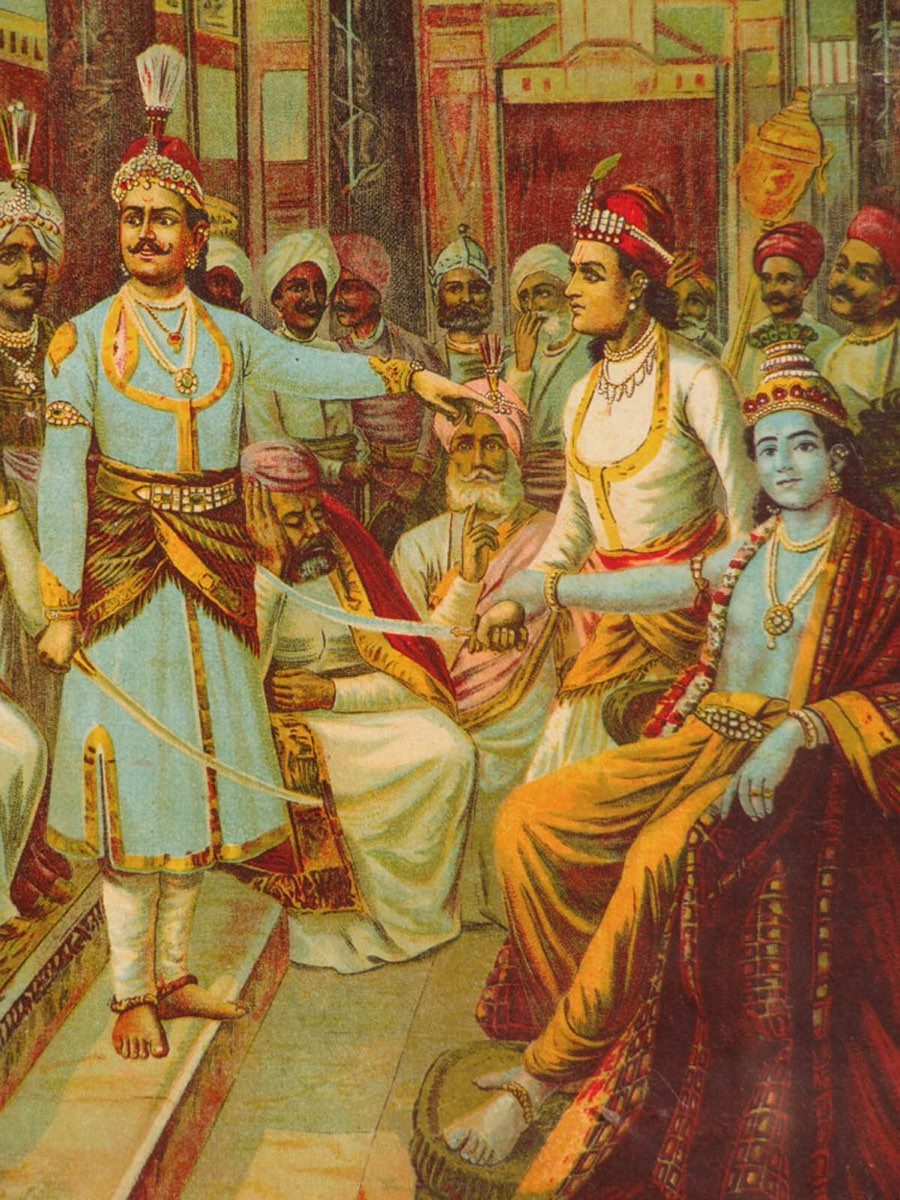
The second are the Brahma Sūtras, attributed to the sage Bādarāyaṇa: short aphorisms that attempt to logically organize the Upanishads' teachings, and so enigmatic that they require commentaries. The third is the Bhagavad Gītā, a passage from the epic Mahābhārata in which the warrior Arjuna converses with Kṛṣṇa before a battle.
The commentaries explain the tradition's diversity. Śaṅkara, Rāmānuja, and Madhva read the same sūtras and arrived at distinct systems.
The basic vocabulary
Five words support nearly everything. Brahman is the ultimate reality, described as pure existence, consciousness, and bliss. Ātman is the deepest self, distinct from ego, body, and mind. Māyā is the power that makes the multiple world appear to be the only reality. Karma is the law of cause and effect of actions, and saṃsāra is the cycle of births and deaths it feeds. Mokṣa is liberation from that cycle, the goal of human life.
For Vedānta, “truth” (satya) is not a correct proposition, but the very nature of Being. The classic formula, “Brahman is the truth, the world is mithyā,” asserts that the world is real only in a relative sense, not an absolute one.
The three schools
Advaita, founded by Śaṅkara, who lived around the 8th century, teaches non-duality: only Brahman is real, and the Ātman is identical to it. The impression of separation comes from ignorance (avidyā). The main path is knowledge, jñāna, with disinterested action and devotion as preparation.
Viśiṣṭādvaita, founded by Rāmānuja (11th and 12th centuries), speaks of qualified non-duality. Brahman is a personal God, and souls and matter, real and eternal, form his “body.” Liberation is loving communion with God, attained through devotion and surrender.
Dvaita, founded by Madhva (13th century), is dualist: God, souls, and world are distinct realities, and only God is independent. Liberation depends on divine grace, obtained through devotion.
The difference is not merely theoretical. Those who believe the problem is ignorance tend to study. Those who see the soul as a creature of God tend to pray and surrender.
How it is studied
The tradition calls for the guru-śiṣya lineage, from teacher to disciple, and four qualifications in the student, attributed to Śaṅkara: discernment between the eternal and the passing; dispassion; six virtues, among them calm, control of the senses, patience, and concentration; and an intense desire for liberation.
The method has three stages. Śravaṇa is hearing the texts explained by a teacher. Manana is reflecting and resolving doubts through reasoning. Nididhyāsana is meditating until the knowledge stops being theoretical and becomes direct experience. As a reading guide, it is common to suggest starting with brief works by Śaṅkara, such as the Tattvabodha and the Ātmabodha, moving on to the Gītā and the shorter Upanishads, and only then tackling the principal ones with their commentaries and the Brahma Sūtras.
Other paths, similar themes
Comparisons with other traditions are common. In Buddhism, the Four Noble Truths address suffering and its cessation, and the idea of no-self contrasts with the Ātman. In Taoism, the Tao is a flow lived through “effortless action.” In Sufism, the Islamic mystic seeks divine unity. In Christian mysticism, the soul passes through the purgative, illuminative, and unitive ways. In Kabbalah, the Infinite reveals itself through the ten sefirot. In Patañjali's yoga, the goal is to separate pure consciousness from matter, within a dualist system.
The common points are transcending the ego, purifying conduct, meditating or praying, and seeking direct experience. The dividing line lies between those who conceive of the absolute as personal and those who see it as impersonal. This convergence is associated with the “perennial philosophy,” an expression popularized by Aldous Huxley, an idea that is debated and not a consensus among scholars.
A path with no finish line
Studying Vedānta works less like a program with a graduation and more like a continuous unfolding. Books and teachers provide the map, but the crossing is individual, and practice carries as much weight as knowledge.
Sources and references for this article
Advaita Vedānta, Portuguese WikipediaVedanta, Portuguese WikipediaAnima Educação repository (document on Vedanta)UFPB repository (document on Vedanta)The secrets of Kabbalah, Superinteressante magazineTranslated from Portuguese. This article was rewritten from a post on the original blog, in Portuguese. Read the original
Get the best articles of the week
One email a week, no spam. Unsubscribe anytime.
Read next
 Vedanta and Yoga · VideoKarma Yoga: acting without attachment to the fruits, the yoga of action
 Vedanta and Yoga · VideoDissolving the mind: what Vedānta means by freeing oneself from thought
 Western esotericism · VideoThe Kybalion, chapter 1: a tradition from teacher to student, and what history says
 The East · VideoKrishnamurti on freedom: no guru, no method and no conflict
 Vedanta and Yoga · VideoUpa-paramā: Vedānta's renunciation means leaning on nothing, not giving up everything