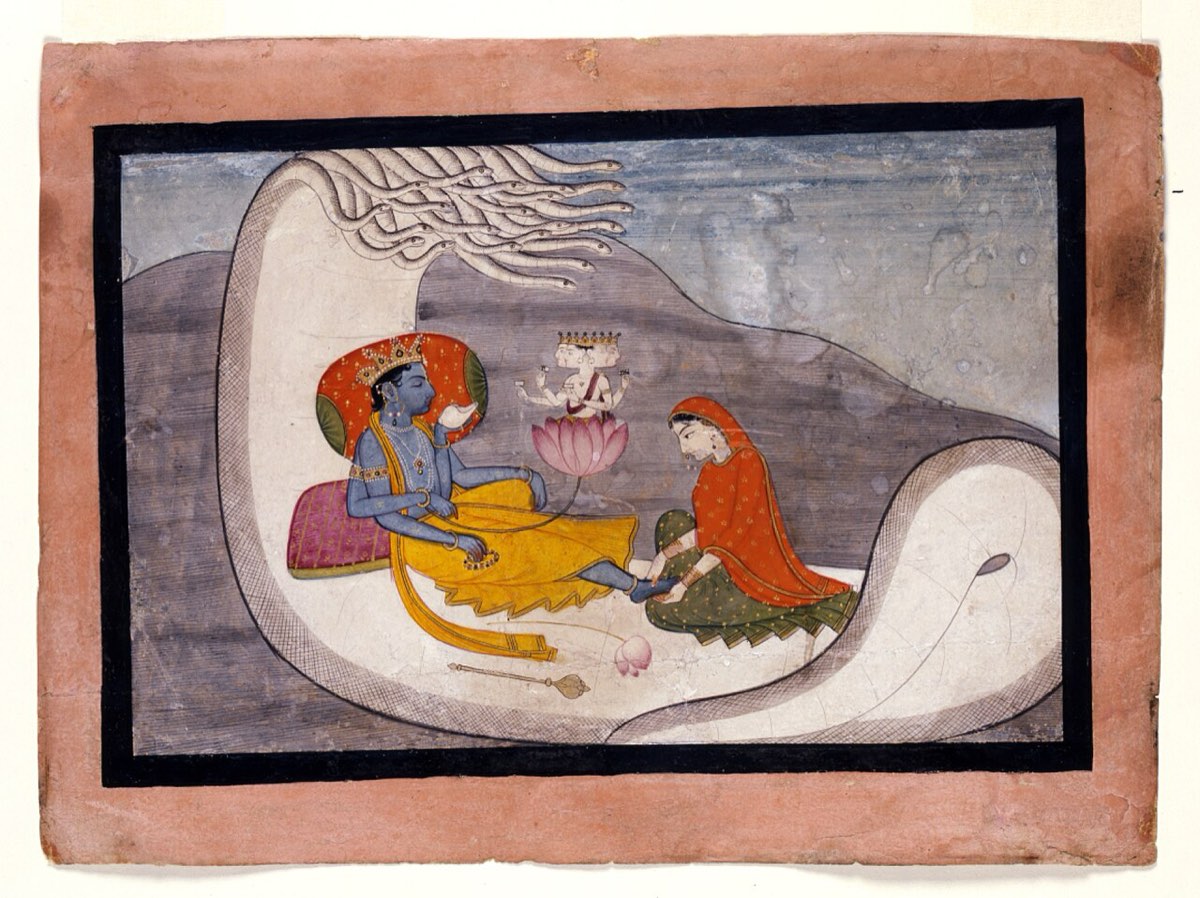
Upa-paramā: Vedānta's renunciation means leaning on nothing, not giving up everything
In Vedānta, one virtue required of students is inner renunciation: no longer propping identity on possessions, relationships, or image, with nothing to abandon.
· 3 min read · Sources

In 1 minute
- Upa-paramā, usually translated as renunciation, is one of six virtues Advaita Vedānta asks of its students; it is an inner attitude, not a ritual.
- According to the teacher, no one needs to physically give anything up, because everyone already depends on the cosmic order, called Īśvara.
- He argues that death forces everyone to let go of everything eventually, and that the renunciate simply does so earlier, with awareness.
Full article
In the Vedic tradition, the final act of one who chooses sannyāsa, the life of renunciation, is a dramatic departure. The practitioner leaves behind ritual, family, and social duties and walks north, without possessions and nearly without clothing, declaring to the devas, the gods of the Vedic pantheon, that he no longer desires any position, not even that of Indra, their king. For a teacher of Vedānta, whose lecture draws on the teachings of Swāmi Dayānanda, the gesture is only a symbol. What he means by it comes next.
Sannyāsa is a form of asceticism marked by renouncing material desires, in which a person lives in spiritual pursuit. But the tradition of Advaita Vedānta, the school of non-duality, makes a distinction: the renunciation required of those who study the philosophy isn't necessarily that of the monk. It is a quality of mind.
A virtue of the student
Advaita Vedānta asks a set of qualifications of its students. Among them is a group of six virtues, which includes mental calm, self-control, endurance, faith in the teacher and the scriptures, and equanimity. One of these virtues is uparati, described as detachment, the absence of desire for worldly pleasures, and the capacity to remain still and unattached to everything. Upa-paramā is the form used in the lecture, generally translated as renunciation.
The lecture tries to show that it is neither physical nor ritual: it is an inner attitude, that of not building the notion of "I" on external supports.
What is truly let go of
According to the teacher, renouncing doesn't mean throwing everything away. It means identifying what a person props their identity on, such as relationships, career, image, body, and status, and being willing not to depend on those to be who they are. Renunciation is letting go of the notion of possession and of an identity built on dependencies. The body and one's belongings can stay. What changes is no longer using them as the foundation of what one believes oneself to be.
Mutual dependence
The teacher questions the image of people sustaining one another. If I depend on you and you depend on me, he argues, both of us ultimately depend on something else: the cosmic order. In Vedānta, that order is called Īśvara, the principle that sustains everything that exists.
From there follows the next point. Renunciation, for him, isn't something mystical reserved for monks: it is recognizing the human condition. The body, the future, life, and death are already entrusted to the cosmic order. Suffering would appear because a person believes they cannot let go of what, in fact, they no longer control.
Death as the starting point
The central argument is death. Everyone, one day, will leave the world with nothing. The difference between people lies in knowing this or not. The renunciate is the one who does now, with wisdom, what everyone will eventually have to do.
The lecture insists that this surrender doesn't impoverish. Whoever lets go of the notion of "mine" gets back what they used, but without attachment, without fear, and without enslavement to what they have.
Why this comes before knowledge
In the teacher's reading, renunciation is a condition for Vedānta to work. The school's central teaching, that the self is identical to Brahman, ultimate reality, would stall halfway in anyone lacking this disposition. With it, a person would stop seeing themselves as small and would recognize themselves as Brahman.
He closes with a challenge. Whoever has the disposition will see Vedānta work; whoever doesn't will keep saying it doesn't. And the "you" that seems to lose something, the lecture concludes, was never what the person truly is. It's a claim of the tradition, and only each person's own practice can test it.
Sources and references for this article
Lecture by a Vedānta teacher, based on the teachings of Swāmi Dayānanda, on upa-paramā
Advaita Vedanta, Wikipedia (English), section on the student's qualificationsSannyasa, Wikipedia (English)Translated from Portuguese. This article was rewritten from a post on the original blog, in Portuguese. Read the original
Get the best articles of the week
One email a week, no spam. Unsubscribe anytime.
Read next
 Vedanta and YogaGita, lesson 18: what I can call "I" and what is merely an object
 Vedanta and Yoga · VideoSahaja avasthā, the natural state of Being: the image of the rope and the snake in Vedānta
 The East · VideoKrishnamurti on freedom: no guru, no method and no conflict
 Science and consciousnessVedānta and quantum physics: what the observer has to do with reality
 Vedanta and Yoga · VideoIs the universe real? Advaita Vedānta's three answers, from creation to "never born"