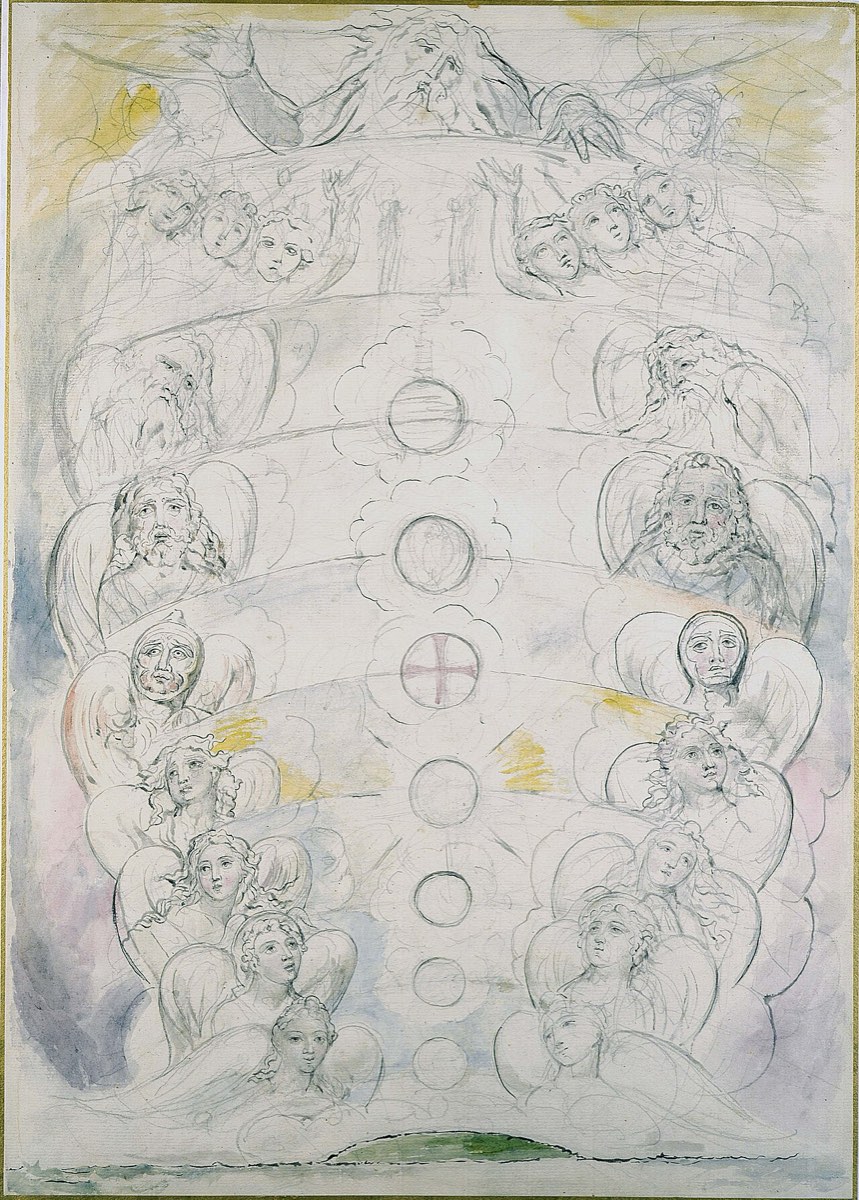
Six minutes without a heartbeat: Philip Hasheider's near-death experience
A Wisconsin farmer says he lived an NDE during the roughly six minutes his heart stopped; the account illustrates what research knows and doesn't know on the subject.
· 4 min read · Sources
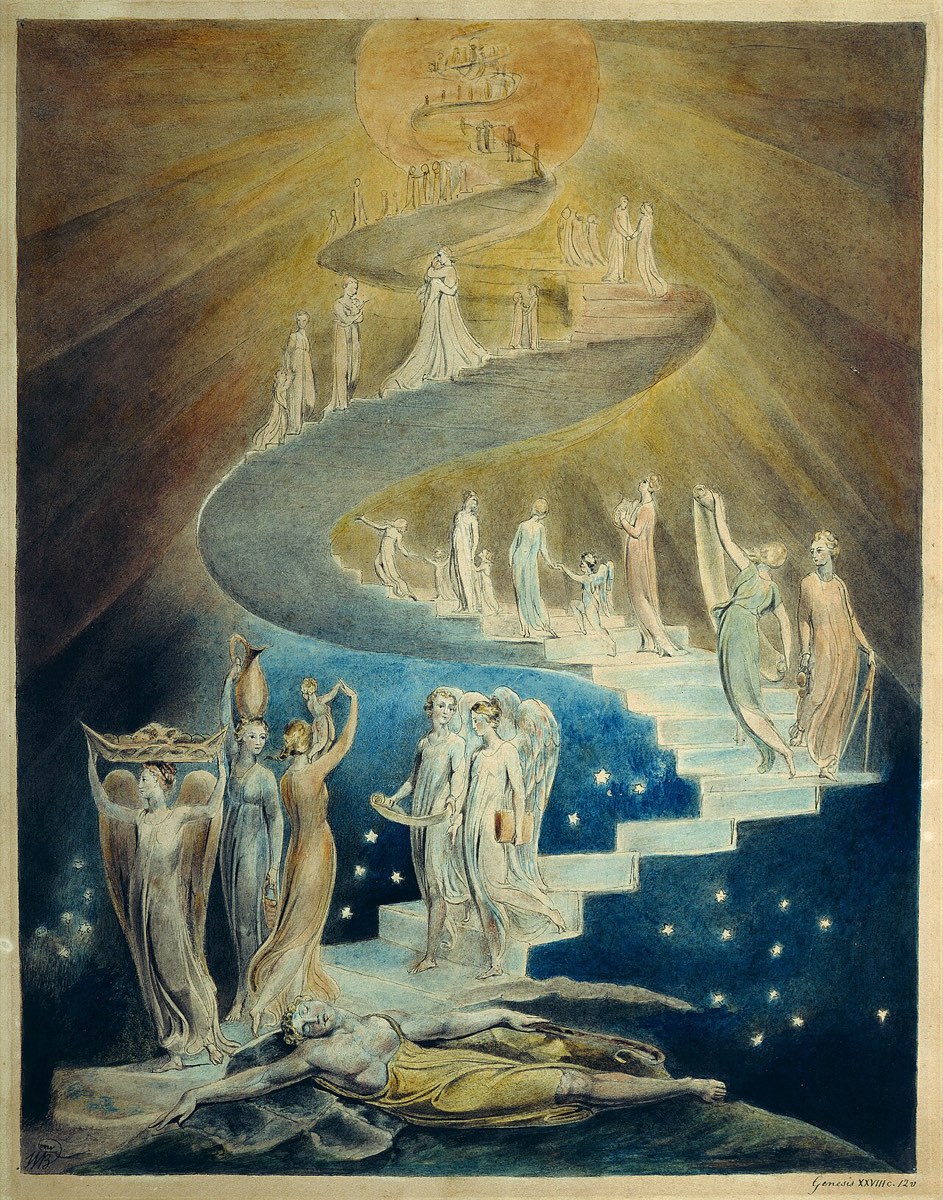

In 1 minute
- Philip Hasheider, a Wisconsin farmer, says he lived a near-death experience during the roughly six minutes his heart stopped, after losing consciousness at a fitness center.
- He describes seeing himself outside his body before a golden sphere of light, which he identified as the Source of everything, and sensing that every person carries a spark of it.
- The account is personal and cannot be verified; studies show NDEs are common after cardiac arrest, but do not settle whether consciousness is independent of the brain.
Full article
That day, Philip Hasheider had a simple task: change the car's tires. Instead, he turned left, toward the local hospital's fitness center, and it was there that his heart stopped for about six minutes. A farmer in Wisconsin, he describes what he lived through in that interval as a passage into another dimension, outside time, space and matter.
The account of someone who came close to dying and describes unusual perceptions has a name: near-death experience, or NDE. One of the situations in which it most often appears is cardiac arrest, the moment the heart stops pumping blood and the brain, within seconds, begins to function precariously. Hasheider's case is a good portrait of what such accounts have in common and of how each person draws their own meaning from them. There is no way to confirm what he describes; he himself calls it a personal experience.
Before and during
The first signs, in his version, were subtle. The farm animals, normally calm, reacted strangely to his presence. Without quite noticing, he changed his plans for the day and went to exercise at the hospital. Today he credits that trivial choice, turning left instead of right, with the fact that he is alive.
In the middle of an exercise, he felt his arms tingle and lost consciousness. Perception, he says, did not go dark. He saw himself floating over waves of energy, in a body reduced to a luminous silhouette, without fear and without pain.
A golden sphere
Ahead of him appeared a golden sphere radiating warmth, love and a sense of belonging. Silver sparks streamed from it, which he understood to be consciousnesses, souls, expanding in every direction. Around it, he describes parallel universes, like sheets of paper suspended in space, linked to the sphere by thin filaments of light.
Leaving the body, intense light, peace and a sense of unity are classic items on the scale created by psychiatrist Bruce Greyson, in 1983, to measure the depth of an NDE. The image of universes as sheets of paper is the most personal part of the account, and the one least suited to comparison.
What he concluded
Hasheider states that no one explained anything to him. He simply knew that the sphere was the Source of everything and that every human being carries the same spark within. Hence the phrase with which he sums up the vision: the Creator would be in all of us.
In that timeless space, he concluded that the body is a temporary vehicle and that true identity is energetic, eternal and intelligent. In the physical world, doctors and paramedics were trying to revive him. He wanted to tell them he was at peace, but could not, because, in his words, it was not yet his time.
It is a spiritualist interpretation, the same one many researchers of the subject espouse: that consciousness would not depend on the brain. Medicine neither confirms nor rules it out.
What research says
Studies show the experience is common. Dutch doctors followed 344 cardiac arrest survivors and found NDE reports in 18% of them, in research published in 2001 in The Lancet. In the 2014 AWARE study, with more than 2,000 cardiac arrests, the rate was close to 10%, and the attempt to test out-of-body perceptions, with images placed on high shelves, recorded no confirmed case of identification.
On the biological side, researchers at the University of Michigan observed, in 2023, bursts of organized brain activity in two of four patients who died after being taken off life support. It is a clue that the collapsing brain does not shut down all at once, not a complete explanation.
The return and the wife's words
Hasheider returned to his body abruptly. He woke up not knowing where he was, surrounded by relatives, with the feeling that time was running backward. He remained confused for hours, with the impression that part of him was still on the other side.
In the following months, he asked himself why he had come back, and for what. The answer, he says, came months later: his wife wrote down something he murmured in his sleep, the sentence he came to consider his mission, to return "to be a channel of hope for those who have none." Life transformation, incidentally, is one of the most cited effects among those who have gone through an NDE.
Lessons from an account
From the episode, Hasheider draws convictions: we are energy before we are body; physical life would be a temporary learning experience; choice would play a central role, since every act helps build the journey; and even those who seem far from the light would carry the Source's spark. He also believes that, at the end of life, we return to a kind of energetic stream of creation, for new missions or as guides for other people.
These are beliefs, not research findings. What the case documents is how a brief experience, occurring within a six-minute interval, can reorganize the course of a life that, until that morning, included nothing more than tires to change.
Sources and references for this article
Testimony by Philip Hasheider (near-death experience)
Van Lommel, P. et al. Near-death experience in survivors of cardiac arrest. The Lancet, 2001Parnia, S. et al. AWARE: AWAreness during REsuscitation, a prospective study. Resuscitation, 2014Greyson, B. The Near-Death Experience Scale. Journal of Nervous and Mental Disease, 1983Xu, G. et al. Surge of neurophysiological coupling and connectivity of gamma oscillations in the dying human brain. PNAS, 2023Translated from Portuguese. This article was rewritten from a post on the original blog, in Portuguese. Read the original
Get the best articles of the week
One email a week, no spam. Unsubscribe anytime.
Read next
 Death and beyond · VideoThe Woman in Blue Who Returns in Three Episodes: A Near-Death Account and Its Readings
 Death and beyond · VideoThe rock that asks about love: Peter's near-death experience, in 1974
 Accounts and channelings · VideoAwakening as teardown: the idea that waking up means losing the character
 Accounts and channelings · VideoWho are you without your name? A talk on social identity and the "higher self"
 Death and beyond · VideoA hereafter with no judge: Laércio Fonseca on the fate of consciousness after death