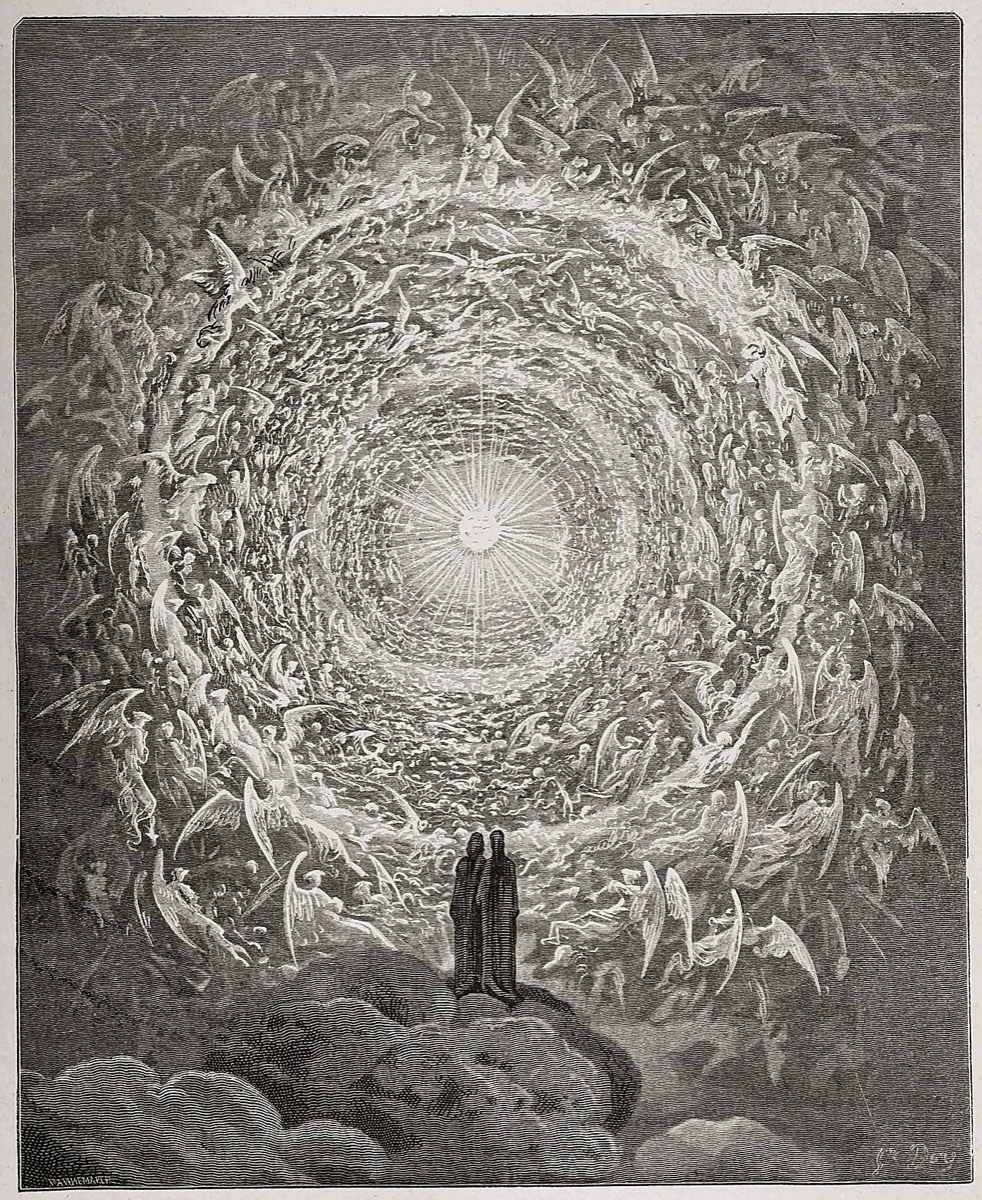
The rock that asks about love: Peter's near-death experience, in 1974
Peter, a 19-year-old Scot, describes conscious stars and a living rock after a motorcycle accident; the case shows what NDEs repeat and what is interpretation.
· 4 min read · Sources


In 1 minute
- Peter, a 19-year-old Scot, had a motorcycle accident in 1974 and describes a welcoming darkness, rings of light, conscious stars and a living rock that questioned him about love.
- Part of the account matches the typical near-death-experience script, such as peace, a reassuring voice, light and a life review; another part, like the rock, is singular.
- The account is personal and unverifiable, and researcher Alexandre Pereira's readings, such as the idea that brotherly love measures the soul's evolution, are hypotheses, not findings.
Full article
In 1974, a 19-year-old Scottish youth was thrown off a motorcycle. As he tells it, the pain gave way to an inner cold, and consciousness began to detach from the body. What he describes afterward reads like a crossing with no map: an embracing darkness, rings of light, stars that recognize him, and a living rock that asks him a single question, about love.
Peter's account, discussed by researcher Alexandre Pereira in a video, belongs to a well-known category, the near-death experience, or NDE. Its plot is more cosmic than many cases, and for that reason it shows clearly where what research documents ends and where the interpretation of the teller and the commentator begins. There is no way to verify what Peter went through.
What NDEs have in common
The term reached the world in 1975, with the book by psychiatrist Raymond Moody. In 1983, psychiatrist Bruce Greyson created a 16-item scale to measure this kind of experience: peace, separation from the body, intense light, meeting beings, a life review. A Dutch study published in 2001 in The Lancet found NDE reports in 18% of the 344 cardiac arrest survivors followed.
Several elements of Peter's account fit that repertoire: the calm, the reassuring voice, the luminous space, the meeting with presences and the idea of a moral examination. The living rock does not. It is a singular detail, and singularity is common in these accounts, which tend to bring images shaped by each person's own background.
The darkness and the rings
Peter says that, after the impact, he felt an intense inner cold and passed out. His consciousness, he says, entered a total darkness, but not an empty one: there was presence, a calm hard to describe, and a gentle voice, more telepathic than spoken. It told him that the people he was leaving behind would be fine and that nothing could touch them.
What follows is a space of luminous, translucent rings, with a rhythmic sound, like helicopter blades, that grew and vibrated inside him until it frightened him. Pereira reads the voice as that of a spiritual guide and the corridor of rings as an energy accumulator that would prepare the soul to communicate with higher-order beings. Those are the commentator's readings; the account itself speaks of sound, light and fear.
Stars that recognize
Next, Peter says he emerged into a cosmic space, among hundreds of colored, conscious stars. Each communicated through thought and emotion, without words. They recognized him as someone returning and conveyed three messages to him at once: that they knew him, that they were happy about his return, and that they loved him very much.
For Pereira, the episode describes a communion in which individual consciousness joins the collective without losing its identity. In mystical traditions, the idea of dissolving without disappearing is recurrent. It has, however, no experimental support.
The rock that asks
The most unusual image comes next. An immense rock, slowly rotating and rough in appearance, approached. Peter perceived it as a conscious being, ancient and powerful, which communicated through energy and emotion and said it would see him again later. The examination was silent and came down to a single question: "What is the essence of your love?" There was no display of rights and wrongs, but rather an immersion in the way he had helped, understood and loved others.
The life review, which Greyson's scale includes, usually appears in these accounts as a panorama with no external judgment. Here it takes the form of an interrogation about love, and Pereira interprets it as a kind of judgment conducted by an evolved consciousness. He further suggests that Peter would not have passed and so was given more time to evolve. That is an inference. The rock, in the account, does not condemn: it only promises a future meeting.
The return
After contact with the rock and with a supreme light, which Pereira describes as fusion with absolute love, Peter felt gently expelled from that state. He returned to the dark space. The stars vanished, the rock withdrew, and a planet appeared that had not been there before. Then he heard his grandmother's voice calling his name and opened his eyes inside an ambulance.
The ending is typical of many accounts: a call from the everyday world, in the form of a loved one, brings consciousness back. For medicine, what the brain does under trauma and cold, and how memories from that phase are organized, remains under study. For the one who lived it, what remained was the certainty of having been examined not for his mistakes, but for what he had loved.
What remains
At the end of the video, Pereira raises the hypotheses that stars might house conscious beings, that semi-material rocks might be home to advanced consciousnesses, and that the spiritual journey might last thousands or millions of years. For him, the ultimate criterion of evolution is brotherly love. None of this has been demonstrated, and the commentator himself treats it as hypothesis.
Peter's account stands as a document of a lived experience, not as a map of the beyond. And it raises, without answering, the question that comes up in so many cases: why those who return from there talk so much about love.
Sources and references for this article
Video by Alexandre Pereira discussing Peter's near-death experience
Van Lommel, P. et al. Near-death experience in survivors of cardiac arrest. The Lancet, 2001Greyson, B. The Near-Death Experience Scale. Journal of Nervous and Mental Disease, 1983Near-death experience, Wikipedia (overview and bibliography, including Raymond Moody, 1975)Translated from Portuguese. This article was rewritten from a post on the original blog, in Portuguese. Read the original
Get the best articles of the week
One email a week, no spam. Unsubscribe anytime.
Read next
 Death and beyondSix minutes without a heartbeat: Philip Hasheider's near-death experience
 Death and beyond · VideoA hereafter with no judge: Laércio Fonseca on the fate of consciousness after death
 Accounts and channelings · VideoAwakening as teardown: the idea that waking up means losing the character
 Accounts and channelings · VideoPortal 33: what's said about an "energy shift," and what psychology observes
 Death and beyond · VideoThe Woman in Blue Who Returns in Three Episodes: A Near-Death Account and Its Readings