The kingdom not of this world: why Kardec ties morality to the afterlife
For Kardec, Christian morality only holds up with the idea of a future life, which Spiritism claims to turn from hope into rational certainty.
· 3 min read · Sources

In 1 minute
- Kardec reads Jesus's answer to Pilate as a refusal of temporal power: the kingdom is said to be a government of conscience.
- Without a future life, he says, renunciation, forgiveness, and humility would lose their meaning; Spiritism claims to give it rational certainty.
- Earthly life is said to be a passage, and a person's worth measured by the good they did; this is doctrine belief, not a proven fact.
Full article
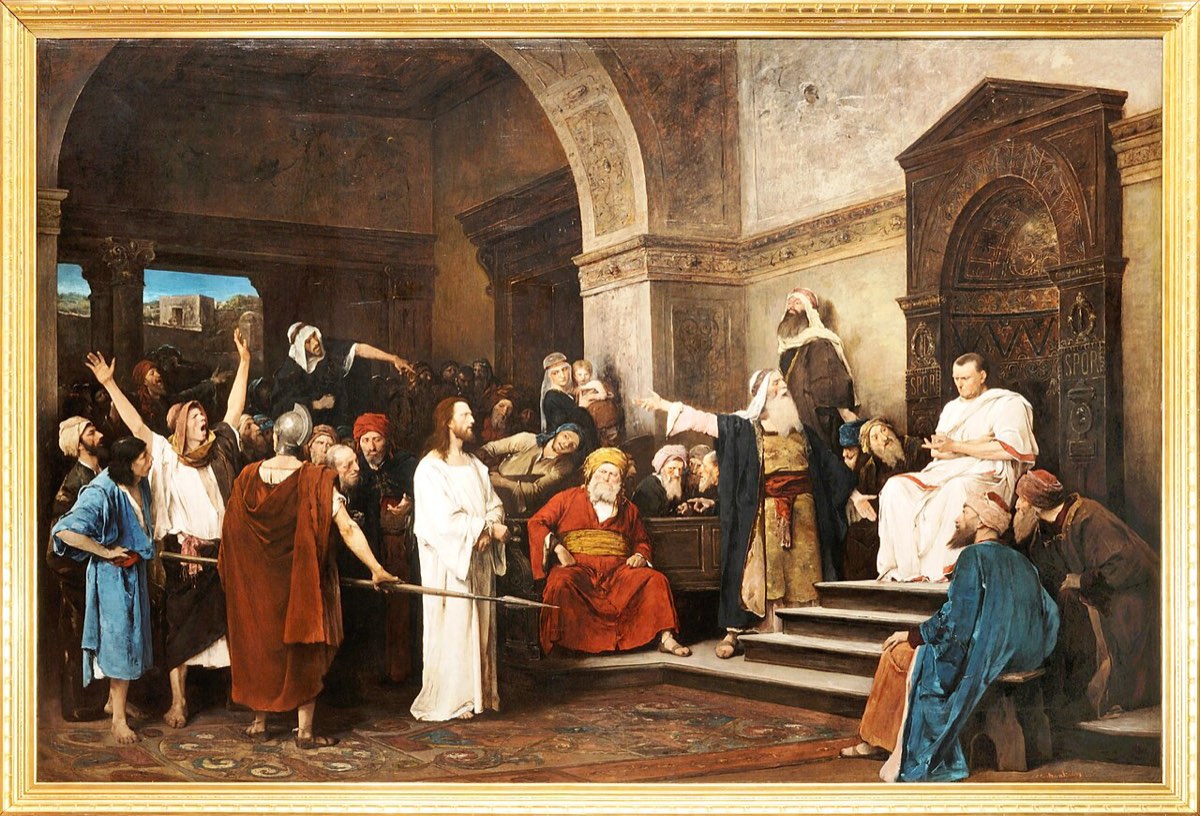
Before Pilate, in the account in the Gospel of John, Jesus says his kingdom is not of this world, and that if it were, his servants would fight. For centuries the saying has been read as a separation between religion and political power. Allan Kardec reads it differently: as a gateway to a central thesis of Spiritist doctrine, that a future life is a natural law, the foundation without which Christian morality cannot stand.
Kardec, the French educator who systematized Spiritism in the nineteenth century, develops the idea in chapter 2 of The Gospel According to Spiritism, a book published in 1864. Communication with spirits and life after death, as described there, are teachings of the doctrine, not proven facts. As a philosophical argument, however, the question can be weighed by any reader: does ethics depend on a belief in what comes after death?
A kingdom without a sword
Kardec reads the answer to Pilate as a refusal of any temporal power. Jesus, in his view, did not come to found a political empire, but to offer a teaching to the human spirit: a government of conscience, not of the sword.
Without a future life, morality cannot stand
For Kardec, Jesus's morality only holds up on the assumption that there is life after this one. Outside that certainty, renunciation, forgiveness, and humility would sound like foolishness or an impossible practice. That is why the author devotes the book's first chapters to this theme: without a spiritual view of existence, Christian morality would lose its logical foundation.
That is where Spiritism comes in. For many, the chapter observes, a future life is just hope or vague belief. The doctrine claims to turn it into rational certainty, through three paths: observing spirit manifestations, hearing spirits' own accounts of life after death, and the logic that ties divine justice to the continuity of existence.
Earthly life as a passage
The certainty of a future life changes, according to Kardec, how one lives the present life. Suffering, loss, injustice, and death itself cease to be final tragedies and become stages of a larger journey. Whoever believes in spiritual life would face trials with serenity, would value character more than possessions, and would see death as a door to liberation.
The importance of earthly goods, he says, is always inversely proportional to one's faith in a future life. Whoever lives bound to the present takes the Earth to be everything and despairs at losing anything; whoever identifies with eternity bears losses and gives priority to the progress of the soul.
The chapter makes a point of saying that this shift in perspective does not cancel out earthly effort: it improves the world without enslaving one to immediacy. God, it states, does not condemn earthly pleasures, but their abuse.
A queen's testimony
The chapter brings a communication attributed to a deceased queen of France. She says she was a queen among men and thought she would arrive a queen in heaven, but was disappointed: none of her royalty served her after death. She had lacked humility, charity, and true love.
From that experience she draws a rule: in the kingdom of heaven, the question is not who one was, but the good one did.
The path among thorns
The conclusion is that the path to heaven is not made of human glories, but of trials overcome with dignity. True royalty is said to be moral, born of the soul, and to continue after death. The closing message advises seeking the path among thorns, not among flowers.
Kardec sees in this not pessimism, but spiritual freedom, trust in God's justice, and the peace of a clean conscience. The kingdom of Christ, in the chapter's reading, is that of the awakened soul, and it begins within each person.
Sources and references for this article
_O Evangelho segundo o Espiritismo_ (The Gospel According to Spiritism), Allan Kardec, chapter 2
The Gospel According to Spiritism, Wikipedia (1864 publication and overview)Allan Kardec, WikipediaSpiritism, WikipediaJohn, chapter 18 (Jesus before Pilate), Almeida Corrigida Fiel BibleTranslated from Portuguese. This article was rewritten from a post on the original blog, in Portuguese. Read the original
Get the best articles of the week
One email a week, no spam. Unsubscribe anytime.
Read next
 Death and beyondKardec, Socrates, and Plato: the morality of Christ separated from dogma in the Spiritist Gospel
 Death and beyondHow Allan Kardec tested spirit messages and assembled the Spiritist codification
 Vedanta and YogaGita, lesson 20: consciousness isn't in the world, the world is in it
 Accounts and channelings · VideoAgarta, the Realm Esotericism Places Inside the Earth: Origins of a Belief
 Death and beyond · VideoWhat souls do after death, in a Spiritist view: work, study, and service