Does God sleep? What Advaita Vedānta says about the consciousness that never sleeps
Starting from a question posed by Ramakrishna, a swami explains that Vedānta sees consciousness as what remains awake through sleep, dream, and waking.
· 4 min read · Sources

In 1 minute
- The starting point is a provocation Sri Ramakrishna posed to a dozing disciple: does God sleep?
- In Advaita Vedānta, body, mind, and emotions are observed, and what observes is consciousness, which does not change, does not sleep, and does not die.
- The talk also covers the three parts of perception and the five differences Advaita considers merely apparent, all dissolved in Brahman.
Full article
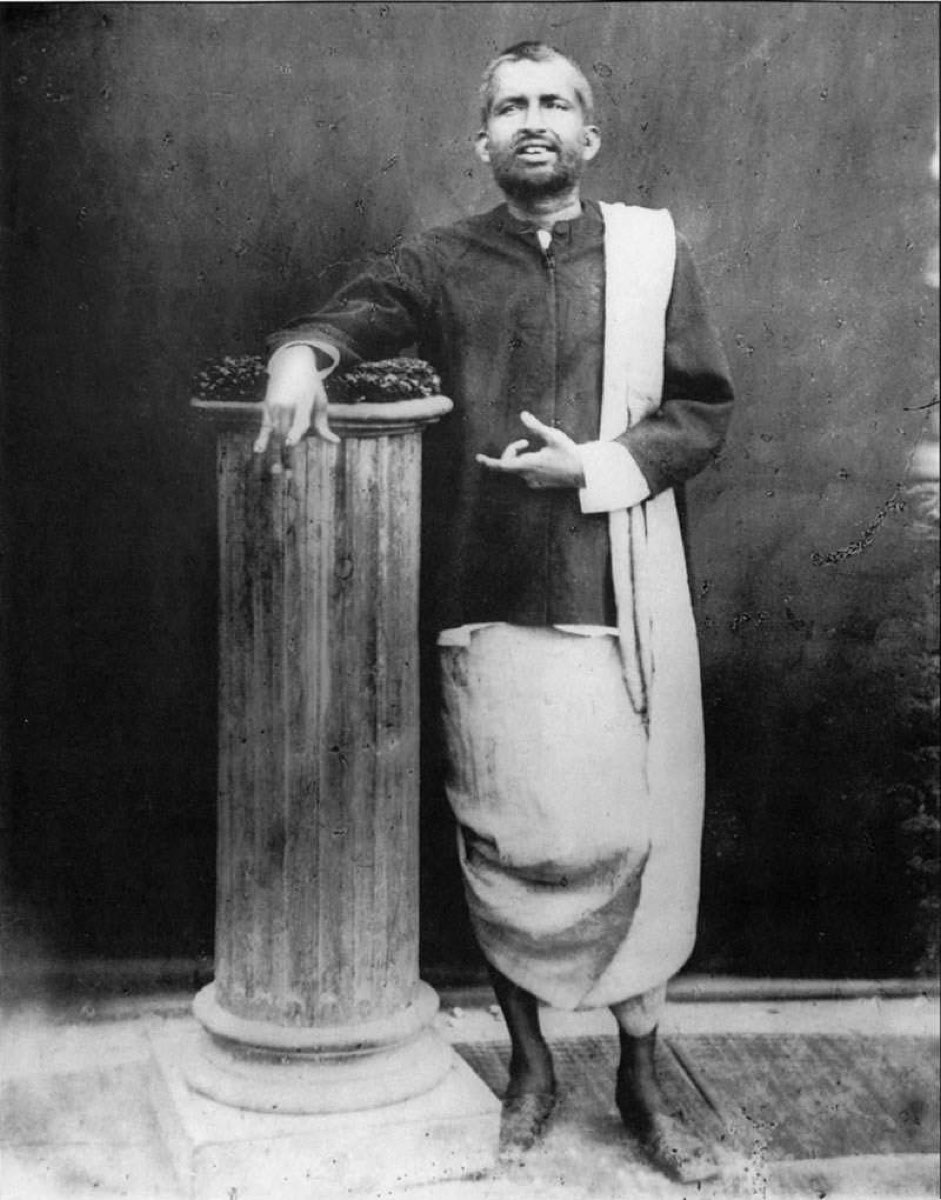
New York is called “the city that never sleeps.” In a Vedānta talk, a swami starts from that nickname to ask a stranger question: does God sleep? He borrows it from Sri Ramakrishna, the nineteenth-century Bengali mystic (1836 to 1886) held by millions of Hindus to be a messenger of God, who used to answer that if God slept, the universe would dissolve. The question opens the door to another: what does it mean to be awake, not in the body, but in spirit.
Advaita Vedānta, the Indian school of non-dualism, answers this with a bold thesis: what wakes and sleeps is the mind, and what watches all of it, without interruption, is consciousness. The talk discussed here, by a swami the original does not identify, works through this thesis by means of two stories, a verse from the Bhagavad Gita, and a few technical distinctions. What follows is a school's teaching, not a scientific claim.
The disciple who stopped sleeping
The swami tells the story of Swami Adbhutananda, known as Latu Maharaj, a disciple of Ramakrishna and the first to become a monk at his side. Among the disciples, who generally came from Bengal's intellectual elite, he stood out for having no formal education. One day, while dozing as he fanned the master, he heard the provocation: “Are you sleeping? Does God sleep?” From then on, the story goes, he decided never to sleep at night again and spent his life meditating and praying while the others rested.
According to the tradition, Latu Maharaj attained supreme realization. The point, for the speaker, is that one who is spiritually awake finds light where everyone else sees only darkness.
Consciousness and the mind
The central point is the difference between the mind and consciousness, chit in Sanskrit. The mind comes and goes: it thinks, feels, falls asleep, wakes up. Consciousness, by contrast, only witnesses, without interruption. Even in deep sleep, when there is no thought, no dream, and no ego, it would still be there. This is the sense behind the claim that sleep is consciousness of absence, not absence of consciousness.
The swami sums up Advaita in three steps. Everything that can be observed, such as the body, thoughts, and emotions, is not the observer. The observer is consciousness. And it never changes, never sleeps, and never dies. Just as everything in a dream is created by the mind, in waking life everything would be perceived within consciousness, and everything would even be consciousness itself.
The sage's day
The speaker recites a verse from the Bhagavad Gita (2.69) about the reversal of night and day: what seems like night to most beings would be day for the sage. In Edwin Arnold's verse translation, the idea appears tied to the “thick night of ignorance.” He comments on it this way: for the world, pleasures, achievements, and emotions are reality. For the sage, they are illusory as a dream, and what is real lies in what others ignore: silence, being, presence.
The same idea shows up in an episode involving Sri Sarada Devi, the Holy Mother, Ramakrishna's wife and a figure venerated in his tradition. A monk was surprised to find her at dawn picking up shards of broken pottery from the floor. She explained that the children walked barefoot and could get hurt, and that she was cleaning up while they slept. It's the image the swami uses for a protective divine presence, awake even in the world's night.
Dream, steady wisdom, and the three parts
Another comparison is with dreaming. While dreaming, streets, trees, and people seem separate. On waking, one sees they were all within the dreamer's mind. In the same way, the sage would perceive that the waking world is also a manifestation of consciousness, and that nothing exists “outside.”
The swami recalls that enlightenment, for Vedānta, is not a flash. It is sthita-prajña, steady wisdom, which remains firm in the face of pain, fear, and death. For the enlightened, he says, Vedānta is reality, not merely philosophy.
He further details what he calls the triputi, the trinity of perception. In every act of perceiving there is an observer (pramātā), an object (prameya), and a means of knowledge (pramāṇa). For Advaita, the three are appearances of the single reality, consciousness. There would be no separate “I” that sees a “world” through the senses: it would all be a staging of the mind, and only the witnessing consciousness is constant.
The five differences
Advaita denies five divisions that seem basic: between one person and another (jīva and jīva), between the person and the world, between God (Īshvara) and the world, among objects themselves, and between the person and God. For the school, all are appearances. There would exist only one Self, one Consciousness, one Reality, called Brahman.
The corollary, in the talk, is personal. You are not the body, which is born and dies, nor the mind, which thinks and gets confused. According to the swami, what sleeps is the ego, not consciousness. And the world appears and disappears, while the light remains.
Sources and references for this article
Talk by a swami on the ever-awake consciousness (video; swami and channel not identified in the original)
Ramakrishna, Wikipedia (in Portuguese)Adbhutananda, WikipediaAdvaita Vedanta, Wikipedia (in Portuguese)The Song Celestial, or Bhagavad-Gîtâ, translated by Edwin Arnold (Project Gutenberg)Translated from Portuguese. This article was rewritten from a post on the original blog, in Portuguese. Read the original
Get the best articles of the week
One email a week, no spam. Unsubscribe anytime.
Read next
 Vedanta and YogaConsciousness with a body: what Vedānta says the “self” is
 Vedanta and Yoga · VideoIs the universe real? Advaita Vedānta's three answers, from creation to "never born"
 Science and consciousnessVedānta and quantum physics: what the observer has to do with reality
 Science and consciousnessQuantum physics and Vedanta: where the analogies help and where they mislead
 Vedanta and Yoga · VideoWhat Dies When Someone Dies? The Answer from Ramana Maharshi and Advaita Vedanta